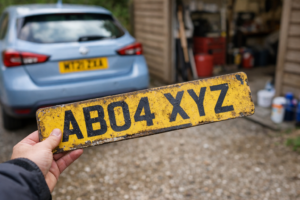

Trailer number plates display the same registration as the towing vehicle and must be clearly visible, secure, and legal for road use. The exact rules depend on the trailer type, plate format, and whether the trailer is used in the UK or taken abroad. This guide explains the legal requirements, plate specifications, fitting rules, and common mistakes that can lead to fines or failed checks.
Key takeaways
- Check the trailer plate before every journey and match it to the towing vehicle.
- Use the towing vehicle’s registration only, not a separate trailer number.
- Fit a standard UK plate with legal font, spacing, character size, and rear visibility.
- Keep the plate clean and unobstructed by straps, bike racks, dirt, or lighting equipment.
- Confirm trailer weight, braking system, and combined limits before towing on public roads.
- Check similar characters carefully, including 0 and O, 5 and S, and 1 and I.
- Order accurately, then mount the plate flat and secure on a firm rear fixing point.
When a Trailer Must Display a Matching Number Plate
Check the trailer’s plate before every journey and make sure it matches the towing vehicle’s registration. UK law requires most trailers on public roads to display the same number plate as the towing vehicle, so a mismatch can lead to a fine and police attention.
The plate must show the towing vehicle’s registration, not a separate trailer number. It must also meet standard number plate rules, with clear characters, correct spacing and an easy-to-read design. If the trailer obscures the vehicle’s rear plate, the trailer plate becomes the legal identifier from behind.
This applies to common road trailers, including box, camping and small utility trailers. Fix the plate securely at the rear, keep it clean and make sure it stays visible in poor weather and low light. A damaged, faded or loose plate can still count as non-compliant, even if the registration is correct.
If the trailer has its own registration under a specialist scheme, follow that category’s rules. For standard road use, check the GOV.UK towing rules and number plate standards from the Driver and Vehicle Licensing Agency. A matched, readable plate helps avoid delays, penalties and failed roadside checks.
Legal Requirements for Trailer Number Plate Format and Visibility
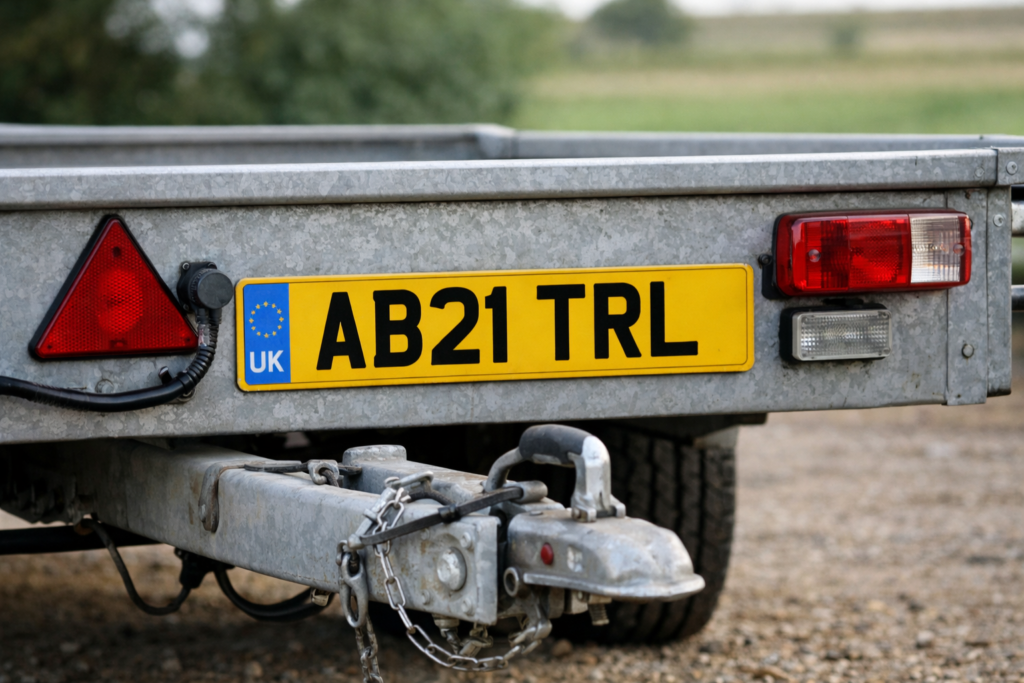
Poor plate visibility can lead to failed roadside checks, fines, and delays, even when the registration is correct. Use a standard UK number plate that meets legal font, spacing, and character size rules, then mount it flat, secure, and fully visible from the rear.
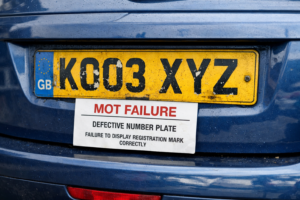
Format and visibility are checked together. A plate with the wrong typeface, altered spacing, or obstruction from dirt, straps, bike racks, or lighting equipment can be treated as non-compliant. Guidance from the GOV.UK number plate rules and The Road Vehicles (Display of Registration Marks) Regulations 2001 sets the baseline for character appearance, reflectivity, and legibility.
Alternative plate styles fit only limited cases. Older vehicles may lawfully use black and silver plates, but that exemption does not apply to most modern towing setups. Decorative surrounds, tinted covers, and angled fixing positions also create risk. Keep the plate clean, illuminated when required, and unobstructed so it stays easy to read in normal road conditions.
Rules for Towing Different Trailer Types in the UK
Trailer rule checks by situation
| Trailer situation | Main rule to check |
|---|---|
| Standard road trailer | Display the same registration as the towing vehicle and keep the plate visible from the rear. |
| Unbraked trailer | Stay within the towing vehicle’s unbraked towing limit. |
| Heavier trailer | Usually needs its own braking system and must stay within gross train weight. |
| Car transporter, horse trailer, plant trailer or larger goods trailer | Check breakaway cables, load security, tyres and lights carefully. |
| Commercial or some international use | Operator licensing, tachograph or trailer registration rules may also apply. |
Weight limits are where towing errors usually start, not with the number plate. In the UK, rules change with the trailer’s maximum authorised mass, braking system, and use, so the towing vehicle and trailer must be treated as one legal combination.
An unbraked trailer must stay within the vehicle’s unbraked towing limit. Heavier trailers usually need their own braking system. The combined weight must also stay within the vehicle’s gross train weight, shown on the identification plate or in the manufacturer’s handbook.
Some trailer types bring extra checks. Car transporters, horse trailers, plant trailers, and larger goods trailers need close attention to breakaway cables, load security, tyres, and lights. Commercial use can also trigger operator licensing, tachograph, or trailer registration rules, especially for some international journeys. The GOV.UK towing guidance and UK trailer registration rules set out the main thresholds.
When those limits and equipment rules are met, the trailer can be used legally on public roads with less risk of enforcement action, instability, or braking problems.
Common Number Plate Mistakes That Can Lead to Penalties
The most common reason for a penalty is simple: the trailer plate does not exactly match the towing vehicle’s registration when used.
Check the characters against the towing vehicle before setting off, then inspect the plate in daylight from a short distance behind the trailer. Pay close attention to similar characters such as 0 and O, 5 and S, and 1 and I. If the towing vehicle changes, replace the trailer plate straight away.
Order replacements from a registered number plate supplier and give the registration exactly as shown on the vehicle documents. Ask for a standard road-legal plate, not a novelty or show plate. Guidance from the GOV.UK number plate rules and the DVLA sets the baseline for legal display.
Drivers also get caught by small errors: cracked plates, faded characters, insecure fixings, or handwritten substitutes. A plate that was legal last month can still attract attention if dirt, damage, or poor mounting makes any character hard to read. Replace worn plates early and include one final check in your pre-journey routine.
How to Order, Fit and Maintain a Trailer Number Plate
How to keep a trailer plate compliant
1
Match the registration
Check the trailer plate matches the towing vehicle’s registration exactly before every journey.
2
Use a legal UK plate
Make sure the plate follows UK rules on font, spacing, character size and readability.
3
Fit it securely at the rear
Mount the plate flat and firmly at the back of the trailer so it acts as the legal identifier when the vehicle’s rear plate is obscured.
4
Keep it visible and clean
Check that dirt, straps, bike racks or lighting equipment do not block the plate, especially in poor weather and low light.
5
Replace damaged plates promptly
A faded, loose or damaged plate can still be non-compliant even if the registration is correct.
Accurate ordering and secure fitting prevent failed checks, lost plates, and avoidable replacement costs. Use the towing vehicle’s registration exactly as shown on its documents, then order from a supplier that produces road-legal UK plates. If you need a replacement quickly, Buy your Trailer Numberplate with the correct registration and standard plate format.
Fit the plate to a firm rear mounting point so it sits level and does not flex at speed. Use screws or a suitable fixing kit that holds the plate flat without cracking it. Keep all characters clear of frame edges, tow accessories, and rear lighting, and check that the plate remains readable after loading the trailer.
Maintenance is simple but should be regular. Wash off road film, inspect for cracks, fading, and loose fixings, and replace the plate if damage affects legibility. Store a spare only if the towing vehicle stays the same, since any vehicle change means the trailer plate must change with it.
Frequently Asked Questions
What number plate must a trailer display in the UK?
A trailer in the UK must display the same registration number as the vehicle towing it. The plate must match the towing vehicle exactly and be clearly visible. It should also meet UK rules for size, spacing and legibility.
Do trailers need their own registration number plate?
In the UK, most trailers do not have their own registration number. They must display a number plate that matches the towing vehicle.
Separate trailer registration only applies in specific cases, such as some trailers used internationally or certain commercial trailers. The plate still needs to meet legal size, spacing and visibility rules.
Are there legal size and visibility rules for trailer number plates?
Use a standard, road-legal number plate sized and spaced to UK rules, and mount it where it stays clearly visible at all times. The plate must be easy to read from behind, not obscured by dirt, loads or fittings. If it is damaged, faded or poorly placed, it can fail legal visibility requirements.
Can I use the same number plate on different trailers?
Only if each trailer is being towed by the same vehicle at the time. In the UK, a trailer must display the registration number of the towing vehicle, not its own separate plate. If you switch towing vehicles, you must also switch the trailer plate to match.
When does a trailer need separate registration in the UK?
Trailers used in certain international journeys must be registered in the UK before travel. This usually applies to some commercial trailers over 750kg and non-commercial trailers over 3,500kg when travelling to countries that require trailer registration. For normal use within the UK, separate trailer registration is not usually needed.