
- DVLA Registered Supplier
- Same Day Dispatch Before 2pm
- Secure Online Payments
Number plates typically last between five and ten years before fading, cracking, or becoming hard to read. Lifespan depends on material quality, weather exposure, road use, and how the plate was made and fitted.
This article explains the signs that a plate needs replacing, the legal standards it must meet, and when damage, discolouration, or wear can make it non-compliant. It also covers how to check a plate’s condition and when replacement is the safer choice.
Key takeaways
- Inspect number plates at least twice a year for fading, cracks and peeling.
- Standard acrylic plates often last several years, but sunlight, salt and washing shorten lifespan.
- Replace the plate once characters lose contrast and stop reading clearly at a glance.
- Check for faded black characters, dull backing, cracked acrylic and lifting laminate.
- Plates must keep correct font, spacing, colours and clear readability to stay legal.
- Fit plates squarely and avoid overtightening screws that distort the face or backing.
- Use suitable drill points or adhesive pads to reduce water ingress and stress cracks.
How Long Standard Number Plates Typically Last
Inspect your number plates for fading, cracks and peeling at least twice a year, because visible wear can make them harder to read and may leave the vehicle looking non-compliant. A well-made standard acrylic plate often lasts several years in normal UK use, but lifespan depends heavily on sunlight, road salt, frequent washing and where the vehicle is kept.
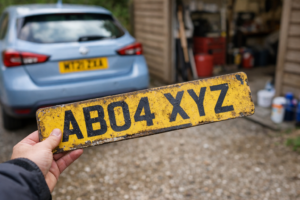
The printed characters sit beneath a clear acrylic face, which protects them from rain and dirt but does not stop long-term UV exposure or impact damage. Over time, the reflective backing can dull, the black characters can lose sharp edges, and the plate surface can craze or split around fixing points.
Replacement becomes sensible as soon as readability drops, even if the plate is still attached firmly. If the plate looks discoloured, loose or damaged, fitting Replacement Number plates restores a clean appearance and helps keep the registration easy to read in daylight and at night.
What Causes Number Plates to Fade, Crack or Become Illegible
Common causes of number plate wear
| Cause | Typical effect on the plate |
|---|---|
| UV exposure and weathering | Fading, dull reflective backing and loss of contrast |
| Road salt, grit and moisture | Edge damage, harder cleaning and faster deterioration |
| Pressure washing | Lifted corners, scratches and water forced into cracks |
| Minor knocks and loose fixings | Splits, vibration damage and stress around screw holes |
| Lower-quality materials | Earlier failure of acrylic, adhesive and reflective film |
Loss of contrast is often the first visible sign of failure, and once the characters stop reading clearly at a glance, replacement is the safest step. In most cases, UV exposure, repeated weathering and physical stress do the damage long before the plate fully breaks.
Sunlight gradually weakens the printed layer and backing materials, especially on vehicles parked outdoors year-round. Road salt, grit and moisture work into small edge defects, while frequent pressure washing can lift corners, scratch the face or force water into existing cracks.
Impact damage also shortens plate life. Minor knocks during parking, vibration from loose fixings and flexing around screw holes can all lead to splits in the acrylic. Once cracking starts, dirt and water make the plate harder to clean and easier to misread.
Cheaper plates tend to fail sooner because thinner acrylic, weaker adhesives and lower-grade reflective films age faster. Better-made replacements from a registered supplier usually hold up longer, while vehicles kept in garages or used less often may show slower wear.
Signs It Is Time to Replace a Number Plate
Quick plate replacement check
1
Check daylight readability
If the registration is not easy to read in normal daylight, replace the plate.
2
Inspect the face and backing
Look for faded black characters, dull white or yellow backing, cracks and peeling laminate.
3
Check fixings and distortion
Stress around fixing holes, looseness or warping can spread and reduce legibility.
4
Replace when cleaning no longer restores clarity
If dirt under peeling layers, moisture ingress or heat warping remain after cleaning, fit a new plate.
Do not wait until a plate falls off or becomes unreadable. Replace it as soon as clear failure signs appear. The test is simple: if the registration is not easy to read in normal daylight, the plate is no longer doing its job.
Check the characters, reflective background and acrylic face. Replace the plate if black characters have faded, the white or yellow backing looks dull, the surface is cracked, or the laminate is peeling. Distortion around fixing holes also matters, because stress there can spread across the plate.
Damage is not the only trigger. Dirt under peeling layers, moisture ingress and heat warping can reduce legibility even if the plate still looks mostly intact. If cleaning no longer brings back a sharp, high-contrast finish, fit a new plate.
UK plates must stay easy to read and securely mounted. If wear affects clarity, spacing or fixing, replacement is the safer and more compliant choice. For the legal display rules, check the GOV.UK guidance on displaying number plates.
Legal Rules Number Plates Must Still Meet as They Age
A number plate can look usable and still fail the legal standard if its characters, spacing or markings are wrong.
Check it against the DVLA display rules. The registration must stay clearly readable, with black characters on a white front plate and black characters on a yellow rear plate. It must also keep the correct size, spacing and font, which in the UK means mandatory Charles Wright lettering, not decorative styles.
Check the bottom edge too. A legal plate should still show the supplier name and postcode, plus the British Standard marking BS AU 145e on newer plates. If these details have worn away, the plate may no longer comply even if the registration stays readable.
Avoid repainting characters, adding tinted covers or using fixing screws that change letters or numbers. Do not add patterned backgrounds, flags or badges unless UK rules allow them. If age has altered the plate or removed required markings, replace it with a compliant plate from a registered supplier instead of repairing it.
How to Make Number Plates Last Longer After Fitting
Habits that help or shorten plate life
Pros
- Inspect plates at least twice a year
- Keep fixings secure to reduce vibration and flexing
- Clean gently before dirt builds into damaged areas
- Choose better-made plates from a registered supplier
- Garage the vehicle where possible to reduce UV and weather exposure
Cons
- Leaving plates exposed outdoors year-round
- Frequent pressure washing close to edges and corners
- Ignoring small cracks around screw holes
- Using cheaper plates with thinner acrylic or weaker films
- Waiting until the plate is unreadable before replacing it
Clarity lasts longer when the plate is fitted squarely, sealed well and kept free from stress at the fixing points. Poor fitting shortens plate life by letting water in, flexing the acrylic and causing cracks that spread with vibration.
Use the right drill points or adhesive pads for the plate type, and avoid overtightening screws. Pressure near the corners can distort the face and weaken the reflective backing. For fitting guidance, follow how to fit number plate instructions that match the fixing method.
Cleaning affects lifespan too. Wash plates with car shampoo or mild soap, then rinse away grit before wiping. Abrasive pads, strong solvents and pressure washers held too close can scratch the surface, lift edges and dull the finish.
Storage and plate quality affect durability as well. Vehicles kept under cover face less UV exposure and moisture. When replacement is due, order a road-legal plate from a compliant supplier such as UK Number plate Maker Online. If you are changing the registration too, Looking for a Personalised Plate ? Buy Private plates UK covers the next step.
Frequently Asked Questions
How long do number plates usually last on a car?
Most car number plates last around 5 to 10 years. Lifespan depends on material quality, weather exposure and how often the car is washed or parked outdoors. Replace them sooner if they are cracked, faded, delaminating or hard to read.
What signs show that a number plate needs replacing?
Age alone is not the main test; legibility and condition matter most. Replace a number plate if the characters are faded, cracked, peeling, warped or hard to read in poor light. You should also replace it if the reflective backing has worn out, the plate is loose, or it no longer meets UK spacing and font rules.
Can you fail an MOT because of a damaged or unreadable number plate?
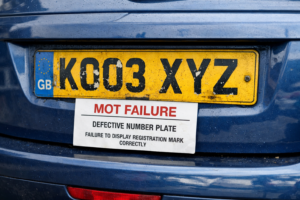
Replace a damaged, faded or obscured number plate before the MOT. Testers must be able to read it clearly, and plates that are cracked, delaminated, badly spaced or too dirty can lead to a failure. If the registration cannot be identified easily, the vehicle may not pass.
What causes number plates to fade, crack or become hard to read over time?
If a plate is exposed to weather year after year, its reflective layer and printed characters will wear down. Sunlight, rain, road salt and repeated washing all speed up fading and surface damage. Age, minor impacts and poor-quality materials can also cause cracks, peeling and reduced legibility.
Are there legal requirements for replacing number plates in the UK?
Yes. UK law requires number plates to stay clearly readable and meet the legal standard for size, spacing, font and condition. Replace them if they are cracked, faded, delaminating or too dirty to read, as non-compliant plates can fail an MOT and may lead to a fine.