



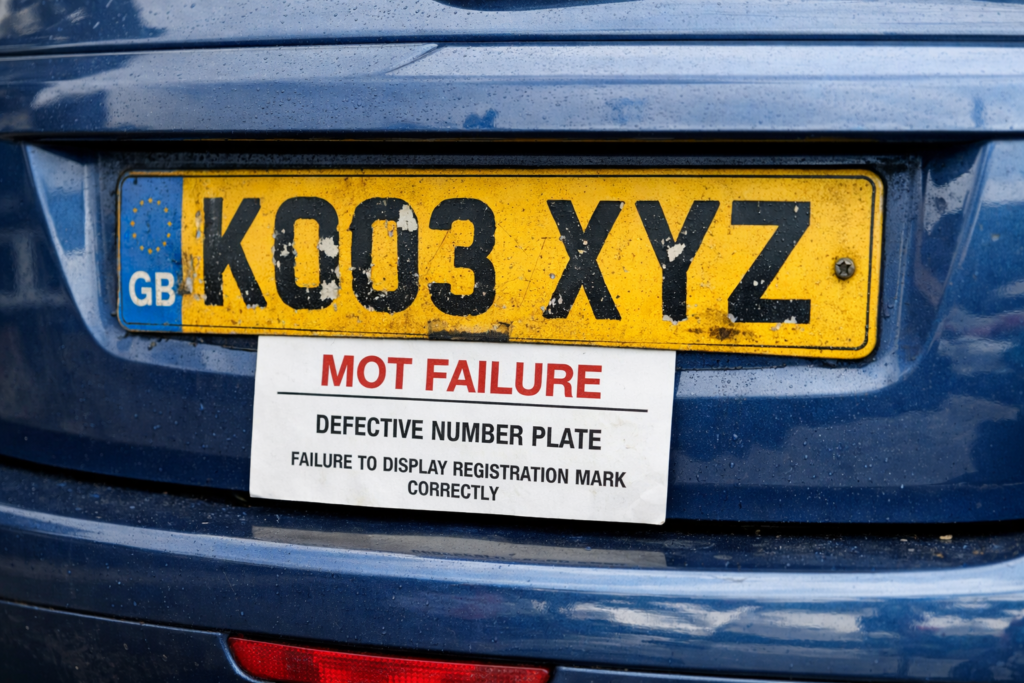
Yes, a number plate can fail an MOT if it is damaged, obscured, incorrectly spaced, the wrong colour, or does not meet legal display rules. Testers check that both plates are present, secure, clearly legible, and easy to read from the required distance. This guide explains the MOT rules for number plates, the faults that lead to a fail, and the simple checks to make before the test. It also covers when a defect may be recorded as an advisory instead of a failure.
Key takeaways
- A number plate can fail an MOT if it is missing, insecure, obscured or hard to read.
- Testers check that front and rear plates are present, clearly legible and fixed securely.
- Dirty plates, cracked covers and peeling characters can all make the registration unreadable.
- Incorrect spacing, altered lettering and non-standard fonts can lead to an MOT failure.
- Plates must show the correct colour scheme: white at the front and yellow at the rear.
- Clean both plates before the test and replace any damaged or faded plate in advance.
When a number plate causes an MOT failure
Clean the number plate before the MOT and check every character from a few metres away. Dirt, damage and poor spacing can make the registration hard to read, and that is enough to fail the test.
DVSA MOT inspection rules require the registration plate to be present, secure, clearly legible and in the correct format. Testers also check the plate’s condition. A cracked, delaminated or badly faded plate can fail if the registration cannot be read correctly.
Spacing and character style matter as much as physical condition. Plates that use non-standard fonts, altered character shapes or decorative fixing bolts can misread the registration. Tinted covers and heavy dirt can cause the same problem, even if the plate itself is not broken.
Replace damaged or incorrectly made plates before the test, and make sure the front and rear plates match legal display rules. If the registration cannot be read quickly and accurately, the vehicle can fail until the plate is corrected.
What MOT testers check on front and rear number plates
A missing, insecure or unreadable plate can turn a straightforward MOT into a fail. Fit standard front and rear plates that meet DVLA display rules, as this leaves the tester little scope to find a defect.
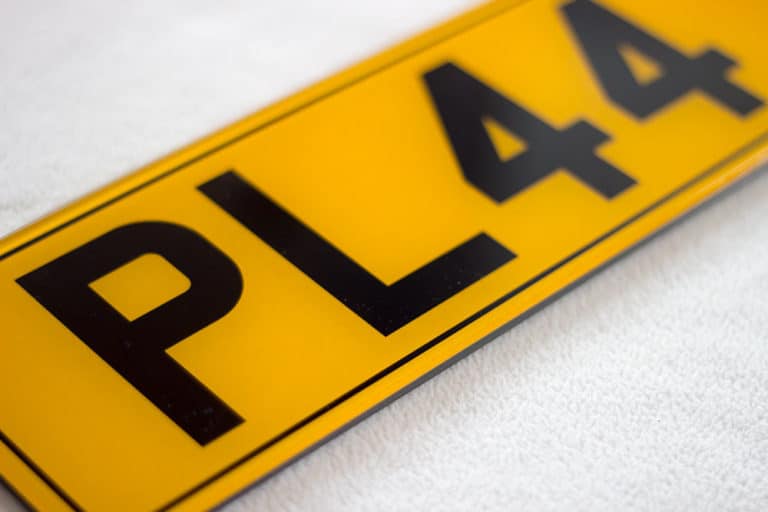
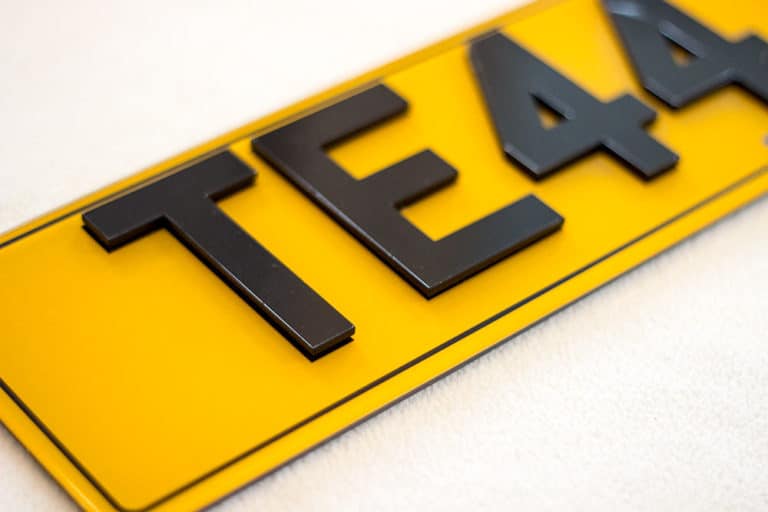
Both plates must be present, secure and easy to read. The front plate needs a white background, the rear a yellow one, with black characters in the required style and spacing. Decorative fonts, tinted covers or fixing screws that alter a letter or number can cause a fail.
MOT checks focus on visibility and compliance, not appearance. A legal plate made to the British Standard used on current registrations, fitted squarely and kept unobstructed, is less likely to raise an issue than a customised plate.
Alternative styles only work if they still meet the legal rules for that vehicle’s age and type. Imported, older and certain historic vehicles may follow different display rules, but the plate still needs to be secure, correctly coloured where required and clearly legible.
Common number plate faults that lead to a fail
Small defects often cause the failure, even when the plate is still attached and broadly readable. MOT testers check whether any fault interferes with clear identification, and minor cosmetic damage can cross that line.
Cracks matter when they run through characters or distort their shape. Delamination can lift the reflective face and blur letters or numbers. Fading reduces contrast, while chips and scratches can break the outline of a character enough to make it unclear under inspection lighting.
Fixings also cause problems. Screws placed through a character can make an “8” look like a “B” or alter another letter or number. Non-standard backgrounds, patterned finishes and heavy borders can distract from the registration, even if the plate still looks tidy at a glance.
Testers follow the inspection rules set out in the DVSA MOT inspection manual. If the plate cannot be read clearly, is too damaged to identify correctly, or does not present the registration in the required way, the result is a fail and the defect must be corrected before a retest.
Number plate rules for spacing, font, condition and visibility
Incorrect spacing or a non-standard font can fail an MOT even when every character is present. Use a plate that matches DVLA display rules exactly, with standard character shapes, correct gaps and no styling that changes how the registration reads.
Check the plate in daylight from straight ahead and a slight angle. Characters should stay sharp, evenly spaced and fully visible, with no screws, badges or borders obscuring any letter or number. If the plate looks customised, replace it before the test.
Condition and visibility need equal care. Wash off road film, remove any cover or tinted shield, and make sure the plate is upright and secure. If the reflective surface has dulled, the laminate has lifted or the background has discoloured, fit a new legal plate from a registered supplier.
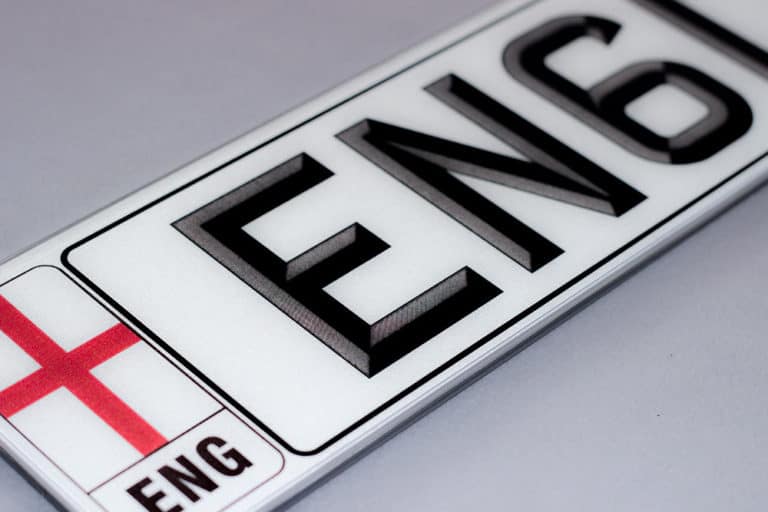
Most avoidable failures come from altered spacing, italic or 3D-effect fonts, cracked acrylic and fixings placed through letters. Keep the plate plain, clean and easy to read at a glance. That is the standard the tester applies.
How to avoid a number plate MOT fail before the test
Preparation changes the result: a clean, secure, standard plate is less likely to trigger an MOT fail than one left dirty, loose or worn. Check both plates a few days before the test so there is time to replace one if needed.
Start with visibility. Wash and dry the plate, then inspect it in daylight from a few metres away. If any character looks faint, distorted or partly hidden, the tester may treat it as unreadable.
Check how the plate is fixed to the vehicle. Loose mountings, cracked corners and lifting layers can worsen with vibration on the way to the test. A plate that sits flat and firm is easier to read and less likely to attract closer inspection.
Use a replacement plate from a registered supplier if the current one is damaged or non-standard. The DVLA number plate display rules set the format, spacing and appearance, while the DVSA MOT inspection manual explains what testers assess.
Remove accessories from the plate area before the appointment. Tinted covers, decorative surrounds, dirt behind covers and fixings through characters can all create avoidable problems. If the plate looks plain, clear and correctly fitted, it is unlikely to cause a fail.
Can a number plate fail an MOT?
Yes, a number plate can fail an MOT if it is damaged, obscured, incorrectly spaced, the wrong colour, or does not meet legal display rules.
How to read a UK number plate ?
Letters and numbers in a model name, code, or reference label identify specific features such as size, series, version, capacity, or production details. Their meaning
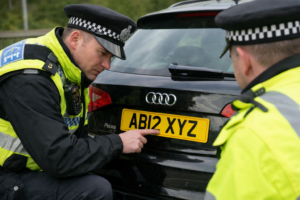
UK number plate laws, what is and is not road legal in 2026
UK number plate laws in 2026 set strict rules on plate format, font, spacing, size, materials and visibility for any vehicle used on public roads.

Driving Tips For Different Weather Conditions
Specifically, these driving tips are for driving in poor weather. It is essential to know how to drive in all types of weather conditions –