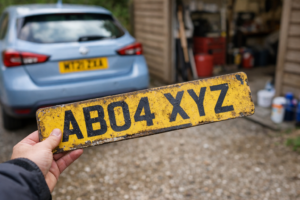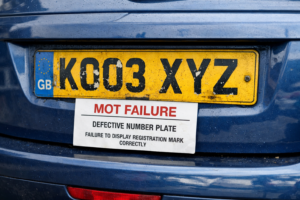

UK number plate laws in 2026 set strict rules on plate format, font, spacing, size, materials and visibility for any vehicle used on public roads. Legal plates must meet DVLA and British Standard requirements, while altered spacing, tinted covers, decorative fonts and obscured characters can make a plate unlawful. This guide explains what counts as road legal, which modifications breach the rules, and the penalties, MOT issues and enforcement points drivers need to know.
Key takeaways
- Use plates made to British Standard BSAU 145e to stay road legal in 2026.
- Display black characters on a white front plate and yellow rear plate only.
- Keep the mandatory Charles Wright font, correct spacing, and standard character sizing.
- Do not use tinted, 3D gel, or irregularly spaced plates that reduce readability.
- Show the plate supplier name and postcode, plus the British Standard mark, on each plate.
- Only approved national flags and identifiers are allowed; extra slogans and graphics are not.
- Replace damaged, cracked, or dirty plates quickly if they make the registration hard to read.
Which number plate formats, fonts and spacing are legal in the UK in 2026
Check the plate against the DVLA display rules before fitting it, because legality depends on the exact format, typeface and character spacing. UK vehicles must use black characters on a white front plate and a yellow rear plate, with the prescribed Charles Wright font and no altered styling.
Spacing must match the registered mark exactly. You cannot move characters to spell a name, close gaps, or use fixing screws to change how a letter or number looks. Plates also need the supplier name and postcode, plus the British Standard mark BS AU 145e on plates made to the current standard.
Vehicles first registered on or after 1 September 2021 may display national identifiers such as UK with the Union flag, but the identifier must follow the approved layout. Decorative backgrounds, tinted covers and 3D or gel characters can make a plate non-compliant if they reduce legibility or break the standard. If the plate fails these rules, it can lead to an MOT failure, a fine, or police action requiring a replacement number plate.
Rules for plate materials, reflectivity, flags, identifiers and supplier markings
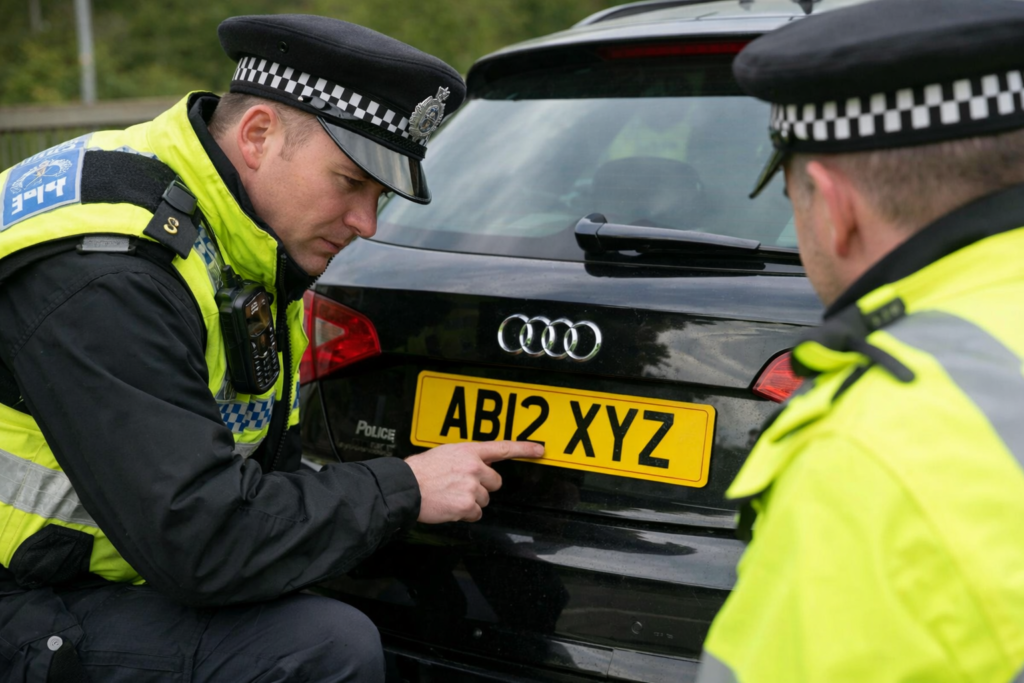
Fail these construction rules and a plate can be rejected at MOT, queried by police, or treated as non-compliant even when the registration is correct. Use plates made to the British Standard required for road use, with the correct reflective surface on front and rear plates and durable acrylic or similar approved material from a registered supplier.
Legality depends on how the plate performs in normal use, not just how it looks. Road-legal plates must show the supplier’s name and postcode, plus the relevant British Standard marking. Those details help enforcement and confirm the plate came through the proper supply chain.
National flags and identifiers are allowed, but only in the permitted style and position. In Great Britain, approved identifiers include UK with the Union flag. Welsh and Scottish identifiers also have specific rules. Decorative backgrounds, tinted covers, patterned finishes and heavily altered reflective effects fall outside accepted road use.
Green flash panels remain allowed on qualifying zero-emission vehicles. For the current display rules, check GOV.UK guidance on displaying number plates.
Vehicles that follow different plate rules, including classic, imported and trade-plated vehicles
Standard display rules do not apply to every vehicle, and owners often make mistakes by fitting ordinary plates to registrations that qualify for different treatment. The legal position depends on the vehicle’s age, registration history and use, not appearance alone.
Vehicles recorded by the DVLA as historic may use traditional black and silver plates, but only if they were built before 1 January 1980 and are registered in the historic tax class. A classic-looking vehicle that fails either condition must still display standard road-legal plates.
Imported vehicles can follow different size and layout rules where construction does not allow a standard UK plate to fit. Even then, the registration must stay clear and correctly displayed under UK display rules.
Trade plates work differently. They are temporary plates issued to motor traders and vehicle testers, and they must be shown only during permitted business use under DVLA rules. Misusing them on private journeys can lead to enforcement action, even if the plate is genuine.
Number plate changes that make a vehicle illegal on the road
Any change that makes the registration harder to read can make the vehicle illegal to use on the road. Keep the plate exactly as issued and replace damaged or altered plates with a compliant version from a registered supplier, following guidance from GOV.UK.
Check the full plate in daylight from a normal viewing distance. Replace it if characters are cracked, peeling, faded, obscured by dirt, bent by impact, or drilled through. Remove tinted covers, decorative surrounds that cut into the margin, and any film that affects reflectivity or camera readability. If the plate is split around a fixing point, fit a new one rather than patching it.
Common mistakes go beyond obvious styling changes. Worn laminate, delamination, bubbling, chips that distort letters under headlights or ANPR cameras, folded corners, tow-bar grime, bike racks, and accessories that cover part of the registration can all put the vehicle in breach. If the plate no longer reads cleanly at a glance, replace or reposition it before using the vehicle on public roads.
Penalties, MOT failures and police enforcement for illegal number plates in 2026
Get number plates wrong and three things can follow: a police stop, an MOT failure, and a fine. In Great Britain, police can issue a non-endorsable fixed penalty for number plate offences and require correction. If the plate appears to hide the vehicle’s identity or uses a mark that does not belong to it, the issue can go beyond a simple defect.
The DVSA MOT inspection checks whether the registration plate is present, secure, legible and in the correct format. A plate that is obscured, damaged or clearly mis-spaced can lead to a fail. That does not create the offence by itself; it records that the vehicle did not meet the test standard that day.
DVLA and police enforcement also rely on automatic number plate recognition, or ANPR. Plates with altered characters, tinted covers or reflective distortion can trigger roadside attention because cameras may not read them reliably. Replace the plate promptly with a compliant one from a registered supplier, and keep proof of identity and entitlement ready for any future check.
Frequently Asked Questions
What makes a UK number plate road legal in 2026?
A UK number plate is road legal in 2026 if it matches DVLA rules on size, font, spacing, colour, visibility and display. It must show the correct registration in the standard Charles Wright style, with no altered spacing or decorative effects. The plate also needs the supplier name, postcode and British Standard mark.
Are 3D and 4D number plates legal on UK roads in 2026?
3D number plates are legal if they meet DVLA rules on font, spacing, reflectivity and British Standard markings. 4D plates can be legal, but only when the raised characters stay solid black and the plate remains fully compliant. Tinted covers, coloured fixings that alter characters, and stylised fonts make either type illegal.
Can you use tinted, coloured or stylised number plates in the UK?
Use standard legal plates only. UK road-legal number plates must have black characters on a white front plate and a yellow rear plate, with no tinting, coloured backgrounds, patterned finishes or stylised fonts.
Any change that reduces clarity or breaks the prescribed format can make the plate illegal and may lead to an MOT failure, a fine or problems with ANPR cameras.
What spacing, font and size rules apply to UK number plates in 2026?
The plate must use the mandatory Charles Wright 2001 font and the standard character size. Characters must be 79mm tall and 50mm wide, except the number 1 and letter I. Spacing is 11mm between characters, 33mm between the age identifier and random letters, with 11mm margins around the plate.
What are the penalties for driving with an illegal number plate in the UK?
Drivers can face a £100 on-the-spot fine for using an illegal number plate in the UK. Police can also fail the vehicle at MOT if the plate is damaged, wrongly spaced or hard to read. In serious cases, the registration may be withdrawn and the vehicle can be stopped from being used on the road.