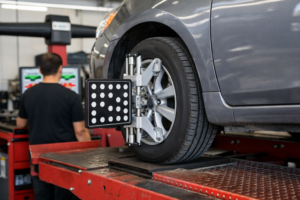

Wheel alignment corrects the angles of the wheels, while tyre balancing corrects uneven weight distribution in the tyre and wheel assembly. Alignment problems often cause the car to pull to one side or wear tyres unevenly, while balancing issues usually cause vibration at certain speeds. This article explains the signs of each problem, the main causes, and when a professional inspection is the right next step.
Key takeaways
- A car that pulls left or right on a flat road often needs alignment.
- An off-centre steering wheel while driving straight points to incorrect wheel angles.
- Vibration that starts around 50-70 mph usually points to tyre balancing problems.
- Front imbalance often shakes the steering wheel; rear imbalance is felt through the seat.
- Alignment affects direction and tread wear; balancing affects smooth rotation and speed-related vibration.
- Mechanics check camber, caster and toe, then inspect suspension and steering parts first.
- Book service early, because delays increase tyre wear and stress bearings, joints and dampers.
Signs Your Car Needs a Wheel Alignment
Check whether the car pulls to one side on a flat, straight road, because that often points to alignment before any workshop inspection. A steering wheel that sits off-centre while driving straight is another clear sign that the wheel angles no longer match the manufacturer’s settings.
Misalignment changes the direction each tyre points and alters how the tread meets the road. That creates uneven wear, often on one edge, and can make the steering feel vague through bends. Potholes, clipped kerbs, and worn suspension parts can shift alignment settings.
Leave tyre balancing for vibration that appears mainly at certain speeds. Alignment issues show up more clearly in tracking, steering position, and tread wear than in a simple shake through the wheel. If the tyres are wearing unevenly, inspect them before replacing anything, including details linked to Car number plates after front-end repairs or accident damage.
Book a four-wheel alignment check if these signs appear together. Correcting the angles early helps tyres wear evenly, keeps braking stable, and reduces strain on steering and suspension parts.
Symptoms That Point to Tyre Balancing Problems
Vibration that starts around 50-70 mph and grows stronger with speed often points to a tyre balancing problem. Start with balancing when the steering wheel, seat or floor shakes at certain speeds but the car still tracks straight on a level road.
Imbalance causes a rotating vibration, not a change in direction. Front tyre imbalance often shakes the steering wheel, while rear imbalance sends more vibration through the seat or cabin floor. A faint humming or drumming sound may rise with road speed.
Balancing fits best when symptoms appear in a narrow speed range and ease off above or below it. A workshop can confirm this quickly with a wheel balancer, which shows where weight is uneven around the tyre and wheel assembly.
Other faults can feel similar but leave extra clues. A bent wheel may cause constant vibration, not just at motorway speeds. Worn suspension parts, damaged tyres or uneven tread can also cause shaking, especially if balancing does not fix it.
How Steering, Vibration and Tyre Wear Reveal the Difference
Wheel alignment vs tyre balancing clues
| Symptom area | More likely alignment | More likely balancing |
|---|---|---|
| Steering behaviour | Car pulls to one side or steering wheel sits off-centre on a straight road | Car still tracks straight on a level road |
| Vibration pattern | Usually not the main clue | Shake builds at certain speeds and may ease above or below that range |
| Tyre wear | Edge wear or feathering from incorrect wheel angles | Wear may be subtler until vibration continues |
| Mechanical cause | Wheel angles out of specification | Uneven weight distribution in the wheel and tyre assembly |
A common mistake is treating any shake or steering issue as one fault, even though alignment and balancing affect the car through different mechanical paths. Separate direction changes from rotating disturbances. Alignment changes wheel angles, so tyres meet the road at the wrong attitude. Balancing corrects uneven weight in the wheel and tyre assembly, which affects how smoothly it spins.
The difference appears in how the symptom develops. If the steering wheel sits crooked or the car drifts on a level road, the suspension geometry is likely out of spec. If vibration builds at certain speeds and then eases or worsens as speed changes, the rotating mass is the stronger suspect. Tyre wear adds another clue: feathering or edge wear points to alignment, while balancing faults often leave subtler wear until vibration continues.
Use all three signals before booking work. Steering behaviour points to wheel angle, vibration points to weight distribution, and tread wear shows how long the problem has affected road contact. That gives a clearer diagnosis than any single symptom.
What Mechanics Check During an Alignment and a Balancing Service
Alignment checks wheel angles. Balancing checks weight distribution in each wheel and tyre assembly.
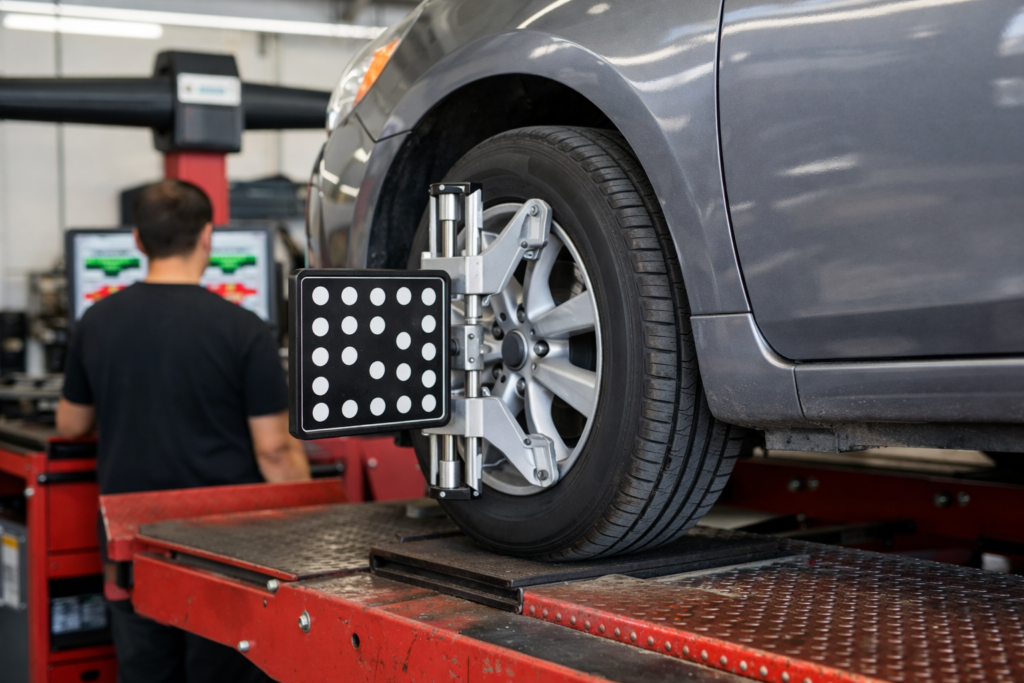
During alignment, mechanics place the car on a rack and measure camber, caster and toe against the manufacturer’s specifications. They inspect steering and suspension parts first, because worn tie rods, ball joints or bushes can make readings unreliable. If parts are sound, they adjust the angles and centre the steering wheel.
During balancing, mechanics remove each wheel and mount it on a balancing machine. The machine shows where the assembly is heavy or light, and the technician adds small weights to correct uneven rotation. Many workshops also check for bent wheels, damaged tyres and missing weights before finishing.
Common mistakes lead to poor results. Skipping a suspension check can leave an alignment out within days. Balancing a wheel with tyre damage can hide the real fault. Another frequent error is checking only the front wheels when vibration or wear suggests all four need inspection.
When to Book a Service and Why Delaying It Costs More
💡
Book early when symptoms overlap
If pulling, an off-centre steering wheel and uneven tyre wear appear together, the article advises booking a four-wheel alignment check early. Correcting the angles sooner helps tyres wear evenly, keeps braking stable and reduces strain on steering and suspension parts.
Tyres last longer, steering stays precise and fuel use often improves when alignment or balancing faults are fixed early. Book a service when uneven tread wear, speed-related vibration or an off-centre steering wheel appears, because these faults rarely stay isolated.
Misalignment scrubs rubber off the tread every mile. An out-of-balance wheel adds stress to tyres, wheel bearings, suspension joints and dampers. After a pothole, kerb strike or road debris impact, arrange an inspection even if symptoms seem minor.
Delaying the visit can turn a modest workshop job into tyre replacement, suspension repair or both. Uneven wear can ruin a tyre before the tread is used across its full width. If other vehicle details also need updating after damage or repairs, check how much are replacement number plates so related costs do not catch you out.
Ask the garage to inspect tyre condition, wheel runout and suspension play before making adjustments. That helps confirm whether the fault is alignment, balancing or a worn component causing the same symptoms.
Frequently Asked Questions
What symptoms suggest a car needs a wheel alignment instead of tyre balancing?
Pulling to one side points to wheel alignment more than tyre balancing. Uneven tyre wear, an off-centre steering wheel, or the need to keep correcting the car on a straight road also suggest alignment trouble. Tyre balancing more often causes vibration through the steering wheel, seat, or floor at certain speeds.
How can steering wheel vibration help identify a tyre balancing issue?
Steering wheel vibration points more often to a tyre balancing problem than an alignment issue, especially at certain speeds. If the shake starts around 50-70 mph and eases when you slow down, an unbalanced front wheel is a common cause. Alignment problems usually pull the car to one side or wear tyres unevenly.
Can uneven tyre wear indicate whether the problem is alignment or balancing?
Check the wear pattern first. Alignment problems usually cause uneven wear across one edge, both edges, or a feathered tread. Balancing issues rarely create a distinct wear pattern on their own; they more often cause vibration and can speed up general tread wear if left unresolved.
Is it safe to keep driving if the car pulls to one side or shakes at certain speeds?
If the pull is strong, the steering wheel shakes hard, or the vibration gets worse with speed, stop driving and have the car checked. Mild symptoms may allow a short trip to a garage, but continued driving can reduce control and wear tyres and suspension parts faster. Avoid motorway speeds until it is inspected.
How often should wheel alignment and tyre balancing be checked?
Check wheel alignment about every 6,000 to 10,000 miles, or at least once a year. Tyre balancing is usually checked when tyres are fitted, rotated or repaired. Inspect both sooner if you notice vibration, uneven tyre wear, pulling to one side, or after hitting a pothole or kerb.