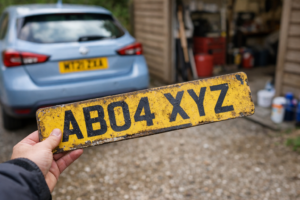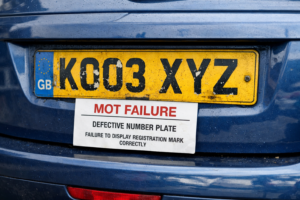

Number plates for caravans are rear registration plates that must display the same registration number as the towing vehicle when the caravan is used on public roads. The plate must be clearly visible, securely fitted, and made to the legal standard required for road use. This article explains the main UK rules, when a separate plate is needed, how caravan number plates differ from car plates, and what to check before travelling.
Key takeaways
- Fit a rear plate to the caravan before towing on any public road.
- The caravan plate must match the towing vehicle’s registration exactly, including spacing and characters.
- Use a road-legal UK plate with black characters on a yellow reflective background.
- Measure the mounting area first so the plate fits securely without overhang or vibration.
- Standard oblong plates suit most caravan holders; shorter plates must still display legally.
- Buy replacements from a specialist UK number plate supplier, not a generic sign printer.
- Avoid tinted covers, non-standard fonts, loose fixings, and damaged reflective surfaces.
When a Caravan Needs a Matching Number Plate
⚠️
Key legal point
A caravan must display a rear number plate that matches the towing vehicle before it is used on public roads. The caravan keeps its manufacturer or chassis identification separately, but that does not replace the road registration plate.
Fit a rear number plate to the caravan before towing it on the road, and make sure it matches the registration on the towing vehicle. UK law requires the trailer or caravan to display the same registration mark as the vehicle pulling it, so the plate on the caravan is not optional once it is in use on public roads.
The caravan keeps its own manufacturer’s plate or chassis identification details, but that is separate from the road registration plate fixed to the rear. The towing vehicle remains the registered vehicle. The caravan simply repeats that registration so it can be identified clearly from behind by other road users, cameras and enforcement officers.
The plate must be readable, securely attached and made to the legal standard for UK number plates. Guidance from the GOV.UK rules on displaying number plates and The AA makes clear that spacing, character style and visibility still apply. If the caravan plate is damaged, obscured or shows a different registration, replace it before the next journey.
Legal Rules for Caravan Number Plates in the UK
Compliant vs Non-Compliant Caravan Number Plates
| Requirement | Road-legal plate | Non-compliant plate |
|---|---|---|
| Registration shown | Matches the towing vehicle exactly | Different registration or incorrect display |
| Colour and background | Black characters on a yellow reflective rear plate | Decorative, hand-written or incorrect colours |
| Construction standard | Made to the legal standard and supplied as a road-legal UK plate | Generic sign-style plate or damaged plate |
| Legibility | Correct font, spacing and clear visibility | Unreadable, obscured or badly spaced characters |
| Fixing | Securely attached for the journey | Loose, cracked or poorly mounted |
A non-compliant caravan plate can lead to a roadside failure, and police may treat an unreadable or incorrectly made plate as an offence. Use a plate built to the same legal standard as a car registration plate, with the correct font, spacing, colour and reflectivity.
UK rules are specific. Rear plates must show black characters on a yellow reflective background, stay clearly legible, and follow the display rules in the Road Vehicles (Display of Registration Marks) Regulations 2001. Plates from a registered supplier should also meet BS AU 145e, which covers durability and visibility.
Alternatives work only in limited cases. A temporary plate may be acceptable if it still meets the legal display rules and stays secure for the journey, but hand-written, damaged or decorative plates are not suitable for road use. For clear guidance, check the GOV.UK number plate rules and buy from a supplier that issues road-legal plates.
How to Choose the Correct Size, Material and Fixing Method
Choosing by appearance alone often causes problems. A plate that fits the carrier badly can crack, vibrate or sit at the wrong angle. Measure the caravan’s mounting area first, then match the plate size so the full registration stays visible without overhang.
Standard oblong plates suit most rear bars and holders. Shorter formats only work if the registration still displays legally. Acrylic is common and gives a rigid, clean finish. If the caravan faces frequent storage moves, tight covers or rough weather, a more impact-resistant plate from a specialist supplier may last longer.
Fixing method affects durability and readability. Use a purpose-made holder where possible, since it supports the full plate and makes replacement easier. If the caravan uses screw fixing, drill only the marked points and use corrosion-resistant screws with caps. Strong automotive adhesive pads can work on flat, clean surfaces, but they need full contact and a stable backing panel. A secure, flush fit cuts rattling, keeps the plate legible and lowers damage risk during towing.
Where to Buy Replacement Caravan Number Plates
Buy a replacement caravan number plate from a supplier that makes road-legal UK plates, not a generic sign printer. The plate must meet the correct standard, and the supplier should let you enter the towing vehicle’s registration exactly as shown.
Check the registration, plate size and fixing layout before you order. Then use a specialist builder to choose the right format and finish. You can Get your Caravan Number plates with our Numberplate Maker and match the plate to the space on the caravan.
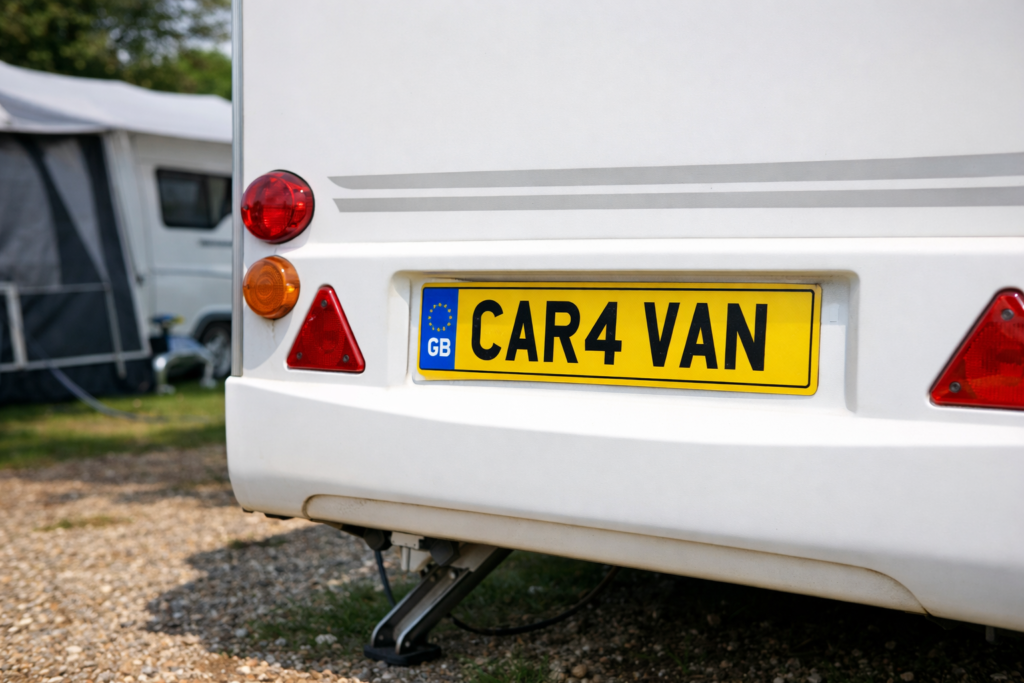
Check the product details before payment. Confirm that the plate is road legal, the characters use the legal style, and the material suits the mounting method. If the caravan uses a holder, match the plate dimensions to it rather than guessing.
Common mistakes include ordering the wrong registration, choosing a novelty plate, or buying a size that cuts off the margin needed for a clean fit. Avoid sellers that do not clearly state compliance details, since replacing an incorrect plate costs more than ordering the right one first.
Common Mistakes That Make Caravan Number Plates Non-Compliant
Roadside readability often fails when a caravan plate is made, fitted or displayed badly. Common breaches involve presentation, not the registration itself: wrong spacing, non-standard fonts, tinted covers, damaged reflective faces, or fixings that leave the plate loose or partly hidden.
UK display rules rely on legibility at a glance, so small changes can make a legal registration look non-compliant. Decorative screws through characters, cracked acrylic, faded backgrounds, steep mounting angles and dirt all reduce clarity.
Ordering errors create another avoidable issue. One wrong character, a missing space or a custom layout breaks the match with the towing vehicle’s registration. Plates sold as novelty items, show plates or sign prints also fail if they do not meet UK registration plate regulations.
Check the plate after fitting, not just on arrival. Stand behind the caravan in daylight, confirm every character is clear, and replace any plate that has warped, cracked or dulled before the next journey.
Frequently Asked Questions
Do caravans need their own number plate in the UK?
No. In the UK, a caravan must display the same registration number as the towing vehicle. The plate must be clearly visible at the rear and match the legal style, spacing and character size required for number plates.
What number plate should be displayed on a caravan when it is being towed?
A towed caravan does not use its own registration number. It must display a rear number plate that matches the towing vehicle.
The plate should be clearly visible, securely fixed, and in the standard UK format. If the caravan blocks the car’s rear plate, the matching plate on the caravan is required.
Are there legal rules for the size, font and spacing on caravan number plates?
Use a road-legal plate made to UK standards. Caravan number plates must follow rules on character size, the approved Charles Wright font, spacing and plate layout so they stay clear and readable. A registered plate supplier can make one that meets the legal specification.
Can you use a homemade number plate on a caravan?
Only if it meets the legal standard for size, font, spacing, material and visibility. A homemade number plate on a caravan is allowed in practice when it clearly shows the towing vehicle’s registration and matches UK number plate rules. If it does not, it can be treated as illegal.
Where can you buy a legal replacement number plate for a caravan?
UK law requires caravan number plates to match the towing vehicle exactly. Buy a replacement from a registered number plate supplier, such as a motor factor, garage or plate specialist. Take proof of identity and vehicle entitlement, as suppliers must check your documents before making a legal plate.